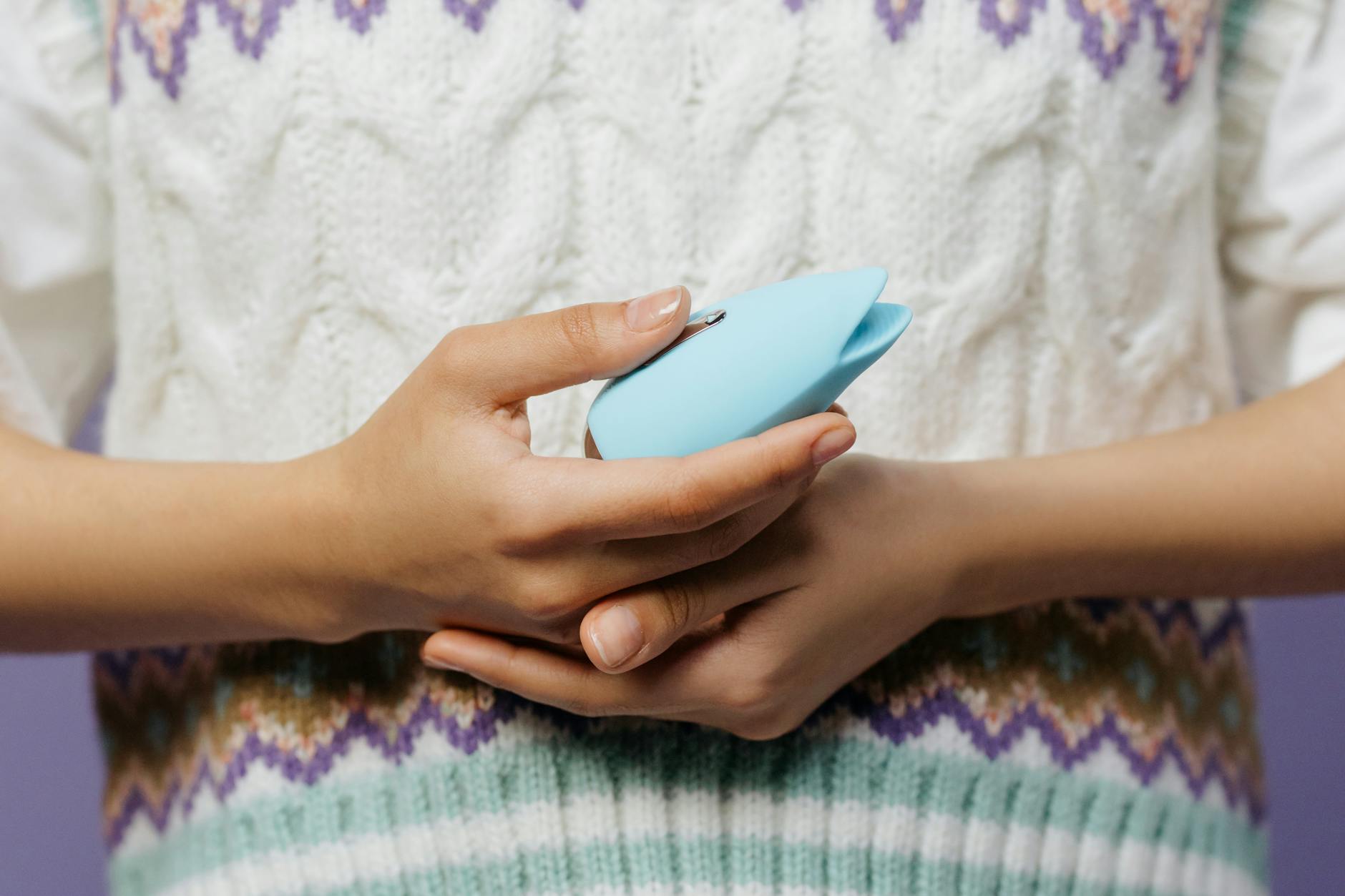
Why Lemon Vibrators Work Better for Partners With Different Bodies
Let's be honest. Most couples never explicitly discuss the anatomy gap. One partner's body responds in minutes. The other's needs thirty. One has deep clitoral sensitivity. The other's is more distributed across the vulva. One wants intense vibration. The other finds it irritating.
Nobody teaches you how to navigate this, so couples usually do one of two things: pretend the difference doesn't exist, or let it quietly erode intimacy over time.
Here's the thing that changes everything. Lemon vibrators, specifically their suction-based design, work differently than traditional vibrators. They don't require both people to have the same body response or the same sensitivity baseline. That's not poetry. That's physics, and it matters for real sex with real partners.
How partner bodies actually differ (and why it matters)
Two people can be equally attracted to each other and still experience pleasure through wildly different pathways. This is where most sex advice falls apart. The assumption that "what works for one works for both" is why so many couples end up frustrated.
Here are the most common mismatches. The first partner might have surface clitoral sensitivity, responding quickly to direct contact. The second might need broader pressure across the whole vulva and a longer warm-up window. Or one partner's clitoral hood retracts easily, exposing the glans fully. The other's stays forward, naturally protecting a more sensitive internal structure. One person orgasms from external stimulation alone. The other needs internal pressure plus external touch.
These aren't individual failures. They're just how different bodies are wired. But in a partnership, they create friction. Literally and emotionally.
Traditional vibrators compound this. A wand vibrator's intense, focused buzz works great for someone with robust surface sensitivity but can feel overwhelming or even painful for someone whose clitoris is more delicate or whose sensitivity sits deeper. A small bullet vibrator might feel too light for one partner and too concentrated for the other. Both of you end up making compromises that don't fully satisfy either person.
Why suction-based lemon vibrators bridge the gap
Lemon clitoral vibrators use air-suction technology instead of straight vibration. Instead of buzzing against tissue, suction gently draws the clitoris into a small chamber where gentle pulsing stimulates it from all angles. This matters because suction works differently on different bodies.
For someone with deep clitoral sensitivity or a prominent clitoral hood, suction provides stimulation without requiring the clitoris to be fully exposed. The suction itself does the work of creating access. For someone with surface sensitivity who usually finds traditional vibrators too intense, suction feels softer and more diffuse. You're not jamming a vibrating head into tissue. You're creating a gentle vacuum.
More importantly, suction patterns feel intuitive to adjust. Most lemon vibrators have adjustable intensity levels that don't just mean "faster buzz." They mean different suction rhythms, different pulse patterns, different strengths. One partner might love the consistent medium pulse. The other might prefer the pulsing wave pattern at low intensity. Both of you can use the same toy and get totally different, equally satisfying experiences.
This is why partners with different bodies often report that a shared lemon vibrator solves the "we can't agree on what feels good" problem faster than anything else.
The warm-up time solution
One of the most common mismatches isn't about anatomy at all. It's about tempo. One partner arousal system kicks into high gear in minutes. The other's needs fifteen or twenty. Couples often interpret this as a problem instead of just a difference.
With a lemon vibrator, the slower partner can use it solo while the faster partner builds anticipation in other ways. Or you can both use it together during foreplay, and the intensity adjustments mean the early-stage partner isn't bored while the quick-response partner isn't overstimulated. The versatility of lemon vibrators makes the difference in arousal timelines irrelevant.
If one of you has experienced how lemon vibrators help rebuild pleasure after menopause, you already know this. Suction technology doesn't punish you for needing longer warm-up. It rewards you for it.
Sensitivity mismatch and the safety factor
This is clinical but important. Some people's clitoral tissue is genuinely more delicate. It's not a dysfunction. It's just anatomy. Maybe years of aggressive vibration have created numbness in one partner. Maybe the other partner has naturally robust sensitivity. Maybe hormonal changes have shifted things for one person in a couple.
When sensitivity levels are mismatched, traditional vibrators often create a silent resentment. The less sensitive partner needs intensity. The more sensitive partner flinches. Both feel guilty. Both suppress communication about it.
Lemon vibrators sidestep this entirely because suction intensity and vibration intensity are separate variables. You can run a lemon vibrator on high suction with low vibration pattern, or low suction with pulsing waves. The permutations mean both partners can find their edge without compromising.
Plus, because suction doesn't create the same micro-friction that vibration does, it's gentler on delicate tissue. If one partner in your relationship has clitoral pain or sensitivity that makes sex difficult, a shared lemon vibrator often becomes the bridge that lets both of you enjoy partnered sex again.
Different orgasm pathways
Here's something that surprises people. Not everyone's orgasm comes from the same stimulus. One partner might climax purely from external clitoral stimulation. The other might need that plus some kind of internal pressure or a specific rhythm pattern. One person's orgasm builds gradually. The other's is more on-off.
When you're trying to have partnered sex and your bodies need different things, it creates a logistical problem that most people just... ignore. You end up focusing on whoever's easier to bring to climax, or you settle for a generic approach that satisfies neither person fully.
A lemon vibrator can be used during partnered sex in ways that accommodate both pathways. One partner can use it while the other provides internal stimulation or pressure from a different angle. Or if you're using it together, the adjustable patterns mean you're not locked into one rhythm. You can shift patterns mid-session as arousal changes.
This is especially true if you're working with partners who have different sensitivity levels and need different approaches to pleasure.
Communication that actually works
Here's what I see most in my practice. Couples with mismatched bodies often stop communicating about pleasure entirely. It feels safer to just... not talk about it. But silence doesn't solve the mismatch. It deepens it.
Introducing a lemon vibrator into your shared pleasure doesn't magically fix communication. But it does something nearly as useful. It gives you a neutral third object to focus on instead of feeling like the problem is your bodies themselves.
Instead of "I can't do what you like," the conversation becomes "Let's find the settings that work for both of us." That shift is huge. Suddenly you're collaborating instead of competing.
When you're both experimenting with a lemon vibrator's different settings and patterns, you're also learning what actually feels good to your partner in real time. No assumptions. No guessing. Just feedback.
The practical side of using lemon vibrators when bodies differ
A few things to keep in mind if you're navigating this with a partner.
Start with the lowest intensity and work up. Even if one partner loves high intensity with other toys, begin with a lower setting on a lemon vibrator and adjust from there. Suction feels different than vibration, and what feels right on a wand might feel like too much on a suction toy initially.
Take turns experimenting. Let each partner solo-test different settings and patterns so you both know what you like before you combine it into partnered play. This takes the performance pressure off.
Use lubricant. Water-based lube makes everything feel better and protects delicate tissue. If one partner has more sensitivity, lube is non-negotiable.
Check in during, not after. "Does this feel good?" in the moment is more useful than debrief conversations later.
FAQ: Partners With Different Bodies and Lemon Vibrators
How do lemon vibrators work for couples when one partner needs more intensity than the other?
Lemon vibrators separate suction strength from vibration pattern. You can run high suction with a gentle pulse pattern, or low suction with stronger pulsing. This means both partners can find a setting that works without either person being overstimulated or undersatisfied. One of you adjusts the intensity mid-session while the other adjusts the pattern. You're both dialing it to your body.
Can you use a lemon vibrator if partners have different sensitivity levels?
Completely. In fact, couples with mismatched sensitivity often report that lemon vibrators solve the problem better than anything else. The adjustable settings mean the more sensitive partner can use a gentler pattern while the less sensitive partner uses higher intensity. You're not forcing one approach on both bodies.
What if my partner and I have totally different warm-up times?
One of you can use the lemon vibrator during your own warm-up while the other partner builds anticipation separately. Or you can both use it together, knowing the early settings are genuinely useful for the slower-arousal partner instead of boring. The flexibility of lemon vibrators makes timing mismatches almost irrelevant.
Do lemon vibrators work if one partner has had clitoral pain or sensitivity issues?
Often yes, and better than traditional vibrators. Suction technology is gentler on sensitive tissue than direct vibration. Because you can adjust suction and vibration independently, someone who usually finds vibration painful can often find a suction setting that feels good. That said, if pain is present, check with a healthcare provider first.
How do we talk about body differences without making it awkward?
Start with curiosity instead of criticism. "What pattern feels best to you?" is different from "I'm not enough for you." A shared lemon vibrator gives you a practical reason to have that conversation. You're not talking about what's wrong. You're exploring what works. The tone shift is everything.
What if we can't agree on any settings that work?
Some couples find that each partner having their own lemon vibrator makes sense. That way you're not negotiating settings. You each dial in what feels right. You can still use them together during partnered sex, just independently adjusted. The point isn't to use the exact same settings. It's to both get what you need.
Final thought
Bodies are weird and varied and sometimes inconvenient to match up with another person's body. That's not a relationship failure. It's just biology. A lemon vibrator can't rewrite your anatomy, but it can give you options when standard approaches don't work. And sometimes, giving each other options is what turns "this doesn't work" into "oh, we were just approaching it wrong."