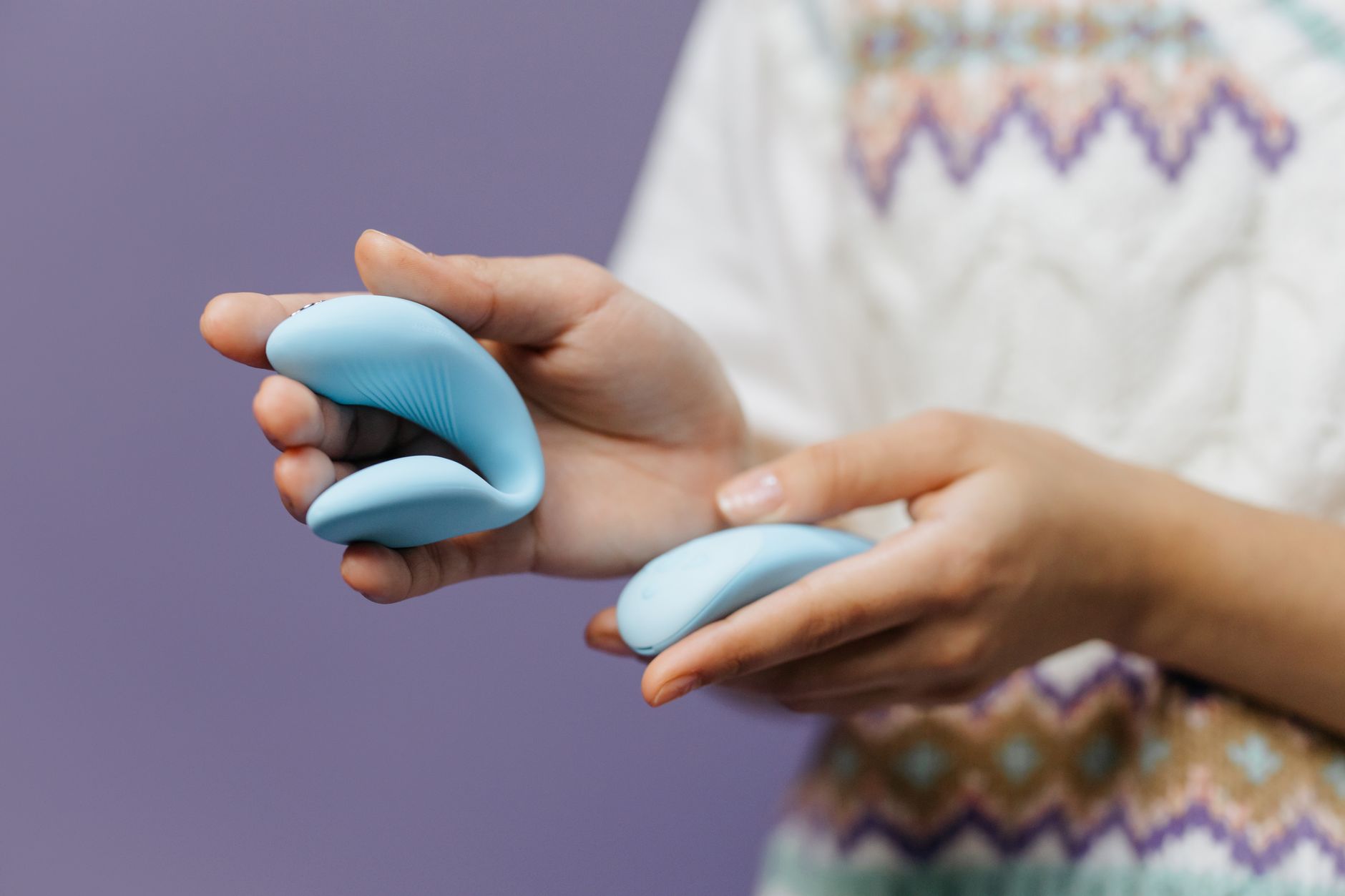
The nervous system is literally sabotaging you
Let's be real. When anxiety is running the show, your body stops being interested in pleasure. You might be lying next to someone you love, mentally want sex, and physically feel absolutely nothing. It's not broken. It's not you. Your nervous system is doing exactly what it was designed to do: protect you.
The problem is that protection mode and pleasure mode use the same biological real estate, and they can't run at the same time. When your vagus nerve is firing in response to stress, danger signals, relationship tension, or even just a chaotic day, your parasympathetic nervous system (the one that says "yes, this is safe, let's feel") gets crowded out. Arousal requires a calm nervous system. Anxiety requires a vigilant one. You can't have both.
Here's where lemon vibrators actually change the game.
How traditional vibrators fail when you're anxious
A standard vibrator requires you to build arousal from the ground up. You need time. You need mental space. You need your nervous system to slowly settle enough for blood to redirect to the clitoris, for the parasympathetic system to activate, for pleasure signals to override worry signals.
When anxiety is high, that almost never happens naturally. You lie there. Nothing builds. Frustration grows. Now you're adding a new layer of anxiety on top of the original anxiety. Failure spiral.
Wand vibrators make this worse because they require you to feel the stimulation building gradually. If your nervous system is still partially in threat-detection mode, gradual stimulation feels like pressure, not pleasure. Your body tenses more. The clitoris retracts. You go further into the nervous system basement.
Why the lemon vibrator works differently
The Lem's suction technology bypasses the gradual arousal problem entirely. It works through a different mechanism than direct vibration. Instead of asking your body to slowly wake up, suction creates an immediate, sustained sensation that feels fundamentally different from anything your anxiety response recognizes as a threat.
Here's the neurology. When you use a lemon clitoral vibrator, the suction activates nerve clusters in the clitoris in a way that's distinct enough to interrupt the anxiety loop. It's specific, intense, and because it's so different from regular vibration, it can create what therapists call a "novelty break" in your anxiety pattern. Your brain has to pay attention to something new, which means it stops running the anxiety story for at least a few minutes.
The second part matters more. Lemon suction toys create arousal faster. You don't need to wait for your nervous system to downshift from threat mode to rest mode. The intensity of the sensation can coexist with residual anxiety in a way that gradual stimulation can't. It's not that the anxiety disappears. It's that pleasure becomes louder than the worry.
The role of predictability and control
Anxiety thrives on uncertainty. In relationships, this shows up as sex becoming loaded. Will I feel something? Will my partner be disappointed? Will I be stuck in my head the whole time? When you add these questions on top of existing life stress or relationship tension, traditional vibrators require too much buy-in from a nervous system that's already in a state of doubt.
With a lemon vibrator, the sensation is more immediately gratifying. You start using it, and within seconds, you know whether your body is going to respond. There's no five-minute ramp-up phase where anxiety can build. This predictability and quick feedback actually calms your nervous system because it removes the uncertainty.
Control matters too. If you're using a lemon sucker solo, you decide intensity, speed, and duration. If you're with a partner, the suction sensation feels less dependent on performance or reciprocal arousal. Your partner's body doesn't have to match yours. Your anxiety about "keeping up" or "doing it right" has less room to breathe.
What actually happens in your body when anxiety is high
When you're chronically stressed or anxious, three things happen to your sexual response:
First, vasoconstriction. Blood vessels constrict. The clitoris, which depends on blood flow to engorge and become sensitive, simply doesn't have enough circulation. You're numb not because you're broken, but because your stress hormones (cortisol and adrenaline) are literally redirecting blood away from your genitals and toward your muscles, heart, and brain. Suction works here because it manually draws blood to the area, bypassing the neurological block.
Second, pelvic floor tension. When you're anxious, the muscles around your vagina and perineum tense protectively. This tension makes direct stimulation uncomfortable and makes orgasm harder to reach. Suction feels different because it's not relying on friction. It's creating a specific pressure and release pattern that the pelvic floor can relax into rather than brace against.
Third, cognitive hijacking. Your prefrontal cortex (the part that thinks, plans, worries) is online and active. The limbic system (the part that feels pleasure) gets sidelined. Lemon vibrators' intensity can actually help quiet the prefrontal cortex because the sensation demands enough attention that intrusive thoughts lose bandwidth. You're not thinking about the email you didn't send or the argument you had yesterday. You're too busy feeling.
The difference between solo and partnered pleasure
If you're anxious in the context of a relationship, a lemon vibrator works for different reasons depending on how you use it.
Solo, it's about rebuilding your own nervous system's capacity to feel pleasure without external pressure. This is crucial. If anxiety has made you numb, you need to relearn that your body can feel. A lemon sucker gives you fast, clear feedback that arousal and orgasm are possible, even when life is stressful.
With a partner, introducing a lemon vibrator can actually reduce performance anxiety because it introduces a third party into the dynamic. You're not relying only on what your partner does or how your body responds to them. There's a tool. There's a different kind of stimulation. This takes some of the psychological load off the interaction. If anxiety has made sex feel like a high-stakes performance where you have to come or disappoint someone, a lemon clitoral vibrator makes the goal achievable. It removes some of the failure risk.
When to use this strategy and when to get support
If your anxiety is situational (work stress, a fight with your partner, hormonal fluctuations), a lemon vibrator often works immediately. You'll notice within a few uses that pleasure becomes accessible again.
If your anxiety is chronic or trauma-related, a lemon vibrator is useful, but it's not a replacement for actually addressing the nervous system dysregulation. Therapy, somatic practices like breathwork, and sometimes medication are worth considering alongside. The vibrator can help you practice pleasure in a safer container, but if your system is seriously stuck in threat mode, that needs deeper work.
If anxiety is showing up specifically around sex with a partner, have a conversation. Don't make it about the vibrator. Make it about your nervous system. "My anxiety has been making pleasure harder to access. I want to try something that might help me feel more." A lemon vibrator is a tool, not a bandage. It works best when both of you understand what's actually happening.
FAQ
Can lemon vibrators actually reduce anxiety, or do they just distract from it?
Both, actually. While using one, the intensity creates enough neurological novelty that your anxiety pattern temporarily breaks. Over time, successfully accessing pleasure rewires your nervous system's association between arousal and safety. It's not a cure for anxiety, but it teaches your body that pleasure is still possible even when stress is present.
How long does it take to feel a difference with a lemon clitoral vibrator if anxiety has made me numb?
Most people report noticeable sensation within the first few uses. Some feel it immediately. If nothing changes after five to ten sessions, your anxiety might be deeper than what a toy can address alone, and talking to a therapist or sex educator is worth it.
Is using a lemon vibrator "cheating" if my partner expects me to orgasm from penetration or manual stimulation?
No. Anxiety doesn't disappear because someone expects it to. Your nervous system needs permission to feel pleasure in whatever form works. A good partner understands that you're not choosing a vibrator over them. You're giving yourself access to sensation. That's collaborative, not avoidant.
What if using a lemon sucker alone makes me feel worse because it highlights that I can't feel pleasure with my partner?
That's worth exploring, but carefully. Start with solo use until you rebuild confidence that your body works. Then, if you want, introduce the vibrator into partnered sex. If the real issue is that your nervous system feels unsafe with your partner, that's a relationship conversation, not a vibrator problem.
Can anxiety medication affect how lemon vibrators feel?
Some antidepressants and anti-anxiety medications can affect sensation or arousal as a side effect. They can also take the edge off anxiety, which can actually help you access pleasure. If you're on medication and not feeling sensation, talk to your prescriber. Sometimes adjusting timing or dosage helps. A lemon vibrator can still work, but you may need longer or more intensity.
If I use a lemon vibrator regularly for anxiety-related numbness, will my body become dependent on it?
No. You won't become dependent, but you might become accustomed to the intensity, which is normal and fine. As your nervous system calms, you may find you need less intensity or can access pleasure in other ways too. The goal isn't to use a toy forever. It's to prove to your system that pleasure is accessible, so anxiety doesn't keep shutting it down.
What comes next
Anxiety and arousal can't coexist for long, but they can exist in the same moment if you have the right tool. A lemon vibrator doesn't fix anxiety. What it does is create a fast enough path to pleasure that your nervous system stops waiting for permission to feel.
If you're stuck in an anxiety loop around sex or sensation, solo exploration with a lemon sucker is a practical first step. From there, you'll have real data: your body does respond, pleasure is possible, and anxiety doesn't have to have the final say. That clarity matters more than any specific technique.
Ready to reconnect with sensation? Start with solo use. Give yourself five to ten sessions before deciding whether this shifts anything. If you want guidance on how to navigate anxiety and pleasure in the context of a relationship, reach out.
Sources
Porges, S. W. (2021). "The Polyvagal Theory: Neurophysiological Foundations of Emotions, Attachment, Communication, and Self-Regulation." W.W. Norton & Company.
Meston, C. M., & Frohlich, P. F. (2000). "The neurobiology of sexual function." Archives of General Psychiatry, 57(11), 1012-1030.
Dubé, E., Lavoie, F., Blais, M., & Hébert, M. (2017). "Psychological and Physiological Aspects of Anxiety Disorders: In Vivo Evidence and Conceptual Models." Journal of Anxiety Disorders, 52, 1-12.
Brotto, L. A., & Basson, R. (2014). "Evidence-based desire and arousal disorders in women and men." Journal of Sexual Medicine, 11(12), 2900-2916.