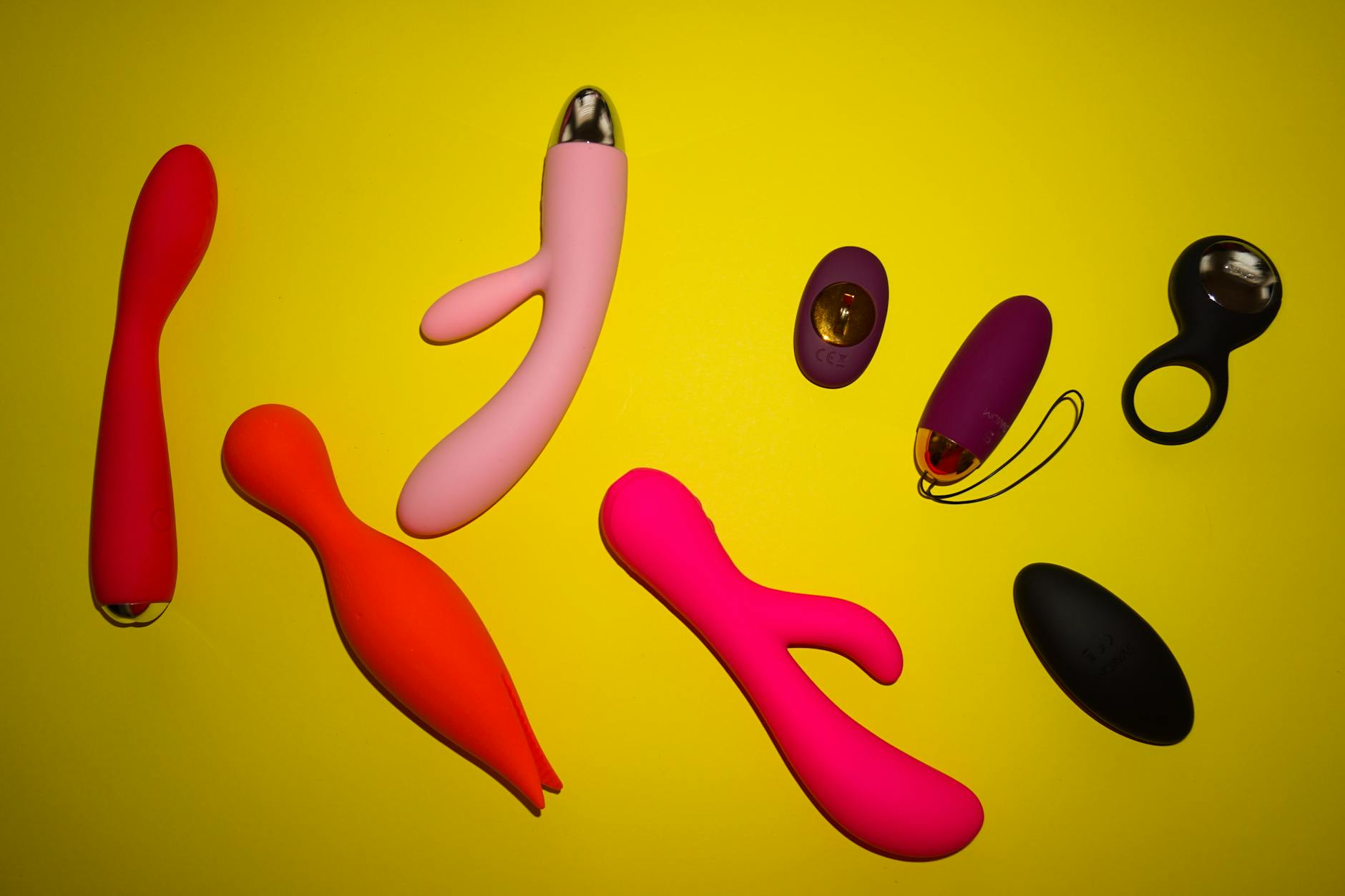
Here's the thing nobody mentions about pleasure and your cycle
Your clitoris changes size, blood flow, and sensitivity throughout your menstrual cycle. Not metaphorically. Physiologically. This matters because if you're using a lemon vibrator or any clitoral toy, what feels perfect on day 7 might feel overwhelming on day 21. Understanding this shift transforms how you use these tools and, honestly, how much pleasure you actually get from them.
Most people assume their body is inconsistent. It's not. It's just responding to hormonal tides you've never been told to pay attention to.
What actually happens to your clitoris across the cycle
During the follicular phase, before ovulation, estrogen climbs. Your clitoris becomes engorged with blood. The tissue swells. Sensitivity increases. By the time you hit ovulation, around day 14, the clitoris is at maximum size and responsiveness. This is not subtle. Some people report a 30 to 40 percent increase in clitoral sensitivity compared to other phases.
Then progesterone rises during the luteal phase. Blood flow to the clitoris decreases. The tissue becomes less engorged. Sensation dulls. Many people find that the same intensity that felt amazing during ovulation feels too harsh in the second half of the cycle.
This isn't a problem with your body or the toy. It's just biology doing its job.
Why lemon clitoral vibrators adapt better than traditional ones
Wand vibrators and traditional bullet vibrators deliver consistent pressure and friction no matter what's happening in your cycle. If the setting felt right on day 14, it often feels aggressive on day 24. You're fighting your own physiology.
Lemon suction toys work differently. The suction mechanism creates a pulse and lift rather than constant vibration. This means you can modulate your experience by adjusting how much of your clitoris is inside the device, how you angle it, and which intensity setting you use. During ovulation, when your clitoris is swollen and hypersensitive, you might use just the outer rim of the device at intensity 2. During the luteal phase, you might go deeper and use intensity 4 or 5.
In other words, a lemon vibrator gives you more control over how much stimulation reaches your clitoris. That flexibility matters when your body is changing.
The ovulation window feels wildly different
During the five days around ovulation, everything intensifies. Not just clitoral sensitivity. Skin sensitivity, smell, arousal, the speed of orgasm. This is evolutionary. Your body is primed for conception, which means it's also optimized for pleasure.
Many people find that during this window, they can orgasm faster, more intensely, and sometimes even multiple times in a session. A lemon clitoral vibrator set to intensity 1 or 2 might be all you need. Some people report that the suction alone, with no vibration, is enough.
If you've been frustrated because a toy "doesn't work," try using it during your ovulation window first. You might discover that the toy is fine. The timing was just wrong.
The luteal phase demands a different approach
After ovulation, progesterone rises and stays high until your period starts. This phase typically lasts 12 to 14 days. During this time, clitoral sensitivity drops. Arousal takes longer to build. Some people report that orgasms feel more diffuse, less sharp, or harder to reach.
This is also the phase when many people experience PMS, fatigue, and mood shifts. Compounded, it can feel like pleasure has just vanished. It hasn't. Your body has different needs.
With a lemon vibrator, this is when you might increase intensity. Start at level 3 or 4 instead of level 1. Take longer warm-up time. Focus on building arousal gradually rather than expecting the same quick response you had during ovulation. Some people find that combining the lemon vibrator with a partner, or with fantasy or erotica, bridges the sensitivity gap.
The menstrual phase is its own thing
During your period, hormone levels are at their lowest. Blood flow to the genitals is actually higher than usual, which paradoxically can make the clitoris feel tender or almost bruised. Some people find this phase wonderfully pleasurable. Others find it uncomfortable. Both are normal.
If you do use a lemon vibrator during your period, consider using it at lower intensities and with extra care around pressure. The increased vascularity means your tissue is more fragile. Some people skip solo pleasure during their period and return to it as soon as they begin the follicular phase.
Tracking your cycle to optimize pleasure
You don't need an app, but it helps. Note three things: when your period starts, when you expect ovulation (typically day 14 if your cycle is 28 days, but it varies wildly), and how pleasure feels at different points.
After two or three cycles, patterns emerge. You'll notice that intensity level 2 feels perfect on day 10 but overwhelming on day 8. You'll realize that your fastest orgasms happen on days 12 to 16. You'll see that the second half of your cycle needs more foreplay, more time, more patience.
Once you know this, you can stop blaming yourself for being "inconsistent" and start using your cycle as data. Some people find that planning partnered or solo sessions around their ovulation window actually improves their overall pleasure life. Others simply adjust their tool settings and warm-up time as they move through their cycle.
How to adjust your lemon vibrator use throughout your cycle
Follicular phase (roughly days 1 to 14): Start with lower intensities. Your clitoris is preparing for peak sensitivity. Let it build. Sensitivity ramps gradually, so you might use intensities 1 to 3.
Ovulation window (roughly days 12 to 16): Go lighter if anything. Your clitoris is at maximum responsiveness. You may not need more intensity; you might need less. Many people find intensity 1 or just the pattern alone is enough.
Luteal phase (roughly days 17 to 28): Increase intensity as needed. Start at level 3 and work up. Extend your warm-up time. The goal is building arousal, not chasing the same quick response you had before.
Menstrual phase: Listen to your body. Some people skip this week. Others find it deeply pleasurable. If you do use a lemon vibrator, use gentler intensities and pay attention to comfort, not speed.
When hormonal birth control changes the equation
If you're on hormonal birth control, your cycle is suppressed. Hormone levels stay relatively flat throughout the month. You won't experience the same intensity peaks and valleys. This means you might feel more consistent throughout the month, which is wonderful. It also means you don't get to ride the natural ovulation peak.
Some people on hormonal birth control find that using a lemon vibrator is more straightforward because intensity preferences don't swing wildly. Others miss the natural rhythm. Neither response is wrong.
If you recently stopped hormonal birth control and started noticing wild swings in pleasure, congratulations. That's your natural cycle returning. The fluctuation is normal, not a sign something's broken.
The emotional rhythm matters as much as the physical one
During the follicular and ovulation phases, confidence and social energy typically increase. You might feel more willing to ask for what you want, more curious, more adventurous. This emotional shift pairs perfectly with the physical heightened sensitivity. You're more likely to slow down and pay attention during ovulation because you're in a phase that naturally encourages presence.
During the luteal phase, energy often turns inward. Some people experience this as a time to reconnect with themselves. Others experience it as less interest in pleasure. Both are normal. Recognizing this emotional shift helps you be gentler with yourself when pleasure doesn't feel urgent in the second half of your cycle.
If you're in a partnership, cycle awareness can shift how you approach intimacy. Instead of expecting the same desire and responsiveness every single week, you work with the body's actual rhythm. That's less about forcing consistency and more about meeting your body where it actually is.
The real benefit of understanding this
Once you connect clitoral sensitivity to your cycle, you stop pathologizing yourself. You're not broken. Your lemon vibrator isn't defective. Your body is just cycling through different neurological and vascular states, exactly as it's supposed to.
That shift in perspective alone often improves pleasure, because you're no longer fighting yourself. You're working with your body's actual rhythm. And that's where the real intensity lives.
People also ask
Why does my clitoris feel swollen during ovulation?
During ovulation, estrogen peaks and blood flow to the genitals increases. Your clitoris engorges with blood, which makes it larger and more sensitive. This vasocongestion is the same mechanism that happens during arousal, except it's happening on a hormonal schedule. The swelling typically subsides after ovulation as progesterone rises and redirects blood flow.
Can I use my lemon vibrator during my period?
Yes, if it feels good. During menstruation, blood flow to your genitals is naturally higher, so tissues may feel tender or sensitive to pressure. If you do use a lemon clitoral vibrator during your period, consider lower intensity settings and extra gentleness. Some people skip this week, and that's equally valid. Listen to your body's actual feedback, not what you think you "should" want.
Does cycle syncing with pleasure actually work?
Yes, if you define "work" as better self-awareness and more satisfying experiences. You can't force your body to feel the same way every day, but you can learn when it naturally feels more or less responsive and adjust your approach accordingly. After two to three cycles of tracking, most people notice clear patterns that help them use tools more effectively and approach pleasure with better timing.
How do I know if my cycle is normal if I'm on hormonal birth control?
You don't have a typical menstrual cycle on hormonal birth control. You have withdrawal bleeding, which is different. Hormone levels stay flat, which is the whole point. If you want to experience natural cycle fluctuations, you'd need to come off hormonal birth control. If you're happy on it and notice pleasure changes, those changes are likely due to other factors, not cycle phase.
Why do some lemon vibrators feel better at different times of my cycle?
Your clitoris changes size, blood flow, and nerve sensitivity across your cycle. What feels perfect when your clitoris is swollen and hypersensitive (around ovulation) might feel too intense when it's smaller and less engorged (during the luteal phase). Lemon suction toys let you adjust intensity and contact point more easily than traditional vibrators, making them more adaptable to cyclical changes.
Can I get better orgasms if I time my pleasure to my cycle?
Many people report faster, more intense orgasms during the ovulation window. This is partly physiological and partly psychological. You might also find that giving yourself permission to slow down and extend foreplay during the luteal phase leads to deeper, more full-body experiences. Pleasure isn't one shape. Timing can help you access different kinds.
Your cycle is data, not destiny
Understanding how your body changes throughout your menstrual cycle doesn't mean you're enslaved to it. It means you have information. You can use a lemon vibrator more effectively, adjust your expectations at different times of the month, and stop assuming inconsistency means something's wrong.
For more on navigating pleasure with your body's natural rhythms, check out our guides on how lemon vibrators help when your body changes from hormonal shifts and how to choose lemon vibrators for different body types and preferences.
If you have questions about what might work best for your body or cycle, reach out at /contact. We're here to help you find the right tool for where you actually are right now.