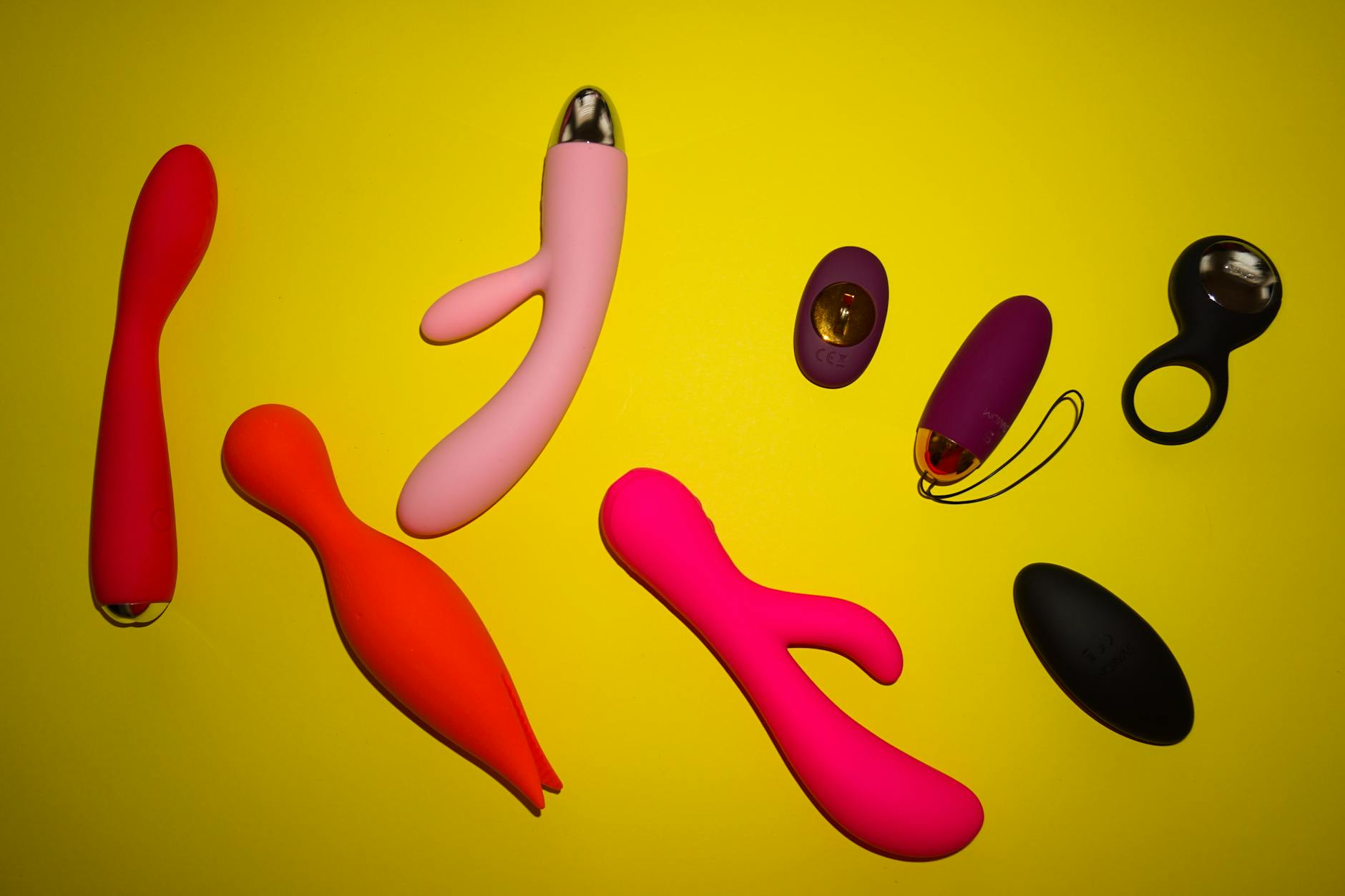
Here's what nobody tells you
Lemon vibrators are designed for clitoral suction. That's their magic. But I've worked with dozens of couples where the penis-owning partner uses them too, sometimes more intensely than their partner does. The sensation isn't the same, and that's exactly why it works so well for couples.
The thing about lemon clitoral vibrators and penis owners is simple: nobody markets them that way, so people assume they shouldn't. But sensation doesn't care about marketing. Let me walk through what actually happens and how to make it work.
Why penis owners feel something completely different
A lemon sucker works by creating rhythmic suction and vibration against tissue. On a vulva, that's the clitoris and labia. On a penis, it's the head, frenulum (the underside where the shaft meets the head), or shaft. The nerve density is wildly different, which means the experience is wildly different.
The clitoris has about 8,000 nerve endings concentrated in a tiny area. The penis head has about 4,000 spread across a larger surface. So when you apply the same lemon vibrator to a penis, the stimulation hits differently. It's often less intense but wider in sensation, more of a full-head experience than a pinpoint response.
Most penis owners I've talked to describe it as "unusual" the first time. Not bad. Not less pleasurable. Just different enough that the brain takes a second to process it.
The patterns that actually work
Here's where it gets practical. The Lem vibrator has multiple suction and vibration combinations. With vulva owners, people usually start on lower patterns and work up. With penis owners, the approach is often reversed.
Try starting on pattern 3 or 4 (higher suction, higher vibration) instead of pattern 1. The sensation tends to register better at that intensity. Then, if it's too much, back down. This is the opposite of the usual recommendation because the nerve distribution is different.
The frenulum is where most penis owners feel the strongest response. It's not visible the way the clitoris is, but it's equally sensitive. If you're using a lemon clitoral vibrator with a partner, spending time on that specific area often produces a noticeably different reaction than the head does.
How to use it together (the practical part)
There are three main approaches couples use with lemon vibrators:
1. Mutual stimulation during penetrative sex. One partner uses the lemon vibrator on their partner during thrusting. This requires some coordination because the toy takes up space and changes the angle of entry. But that change is actually the point. It shifts the stimulation enough that both partners feel something different from their usual rhythm.
2. Foreplay focus. Use the lemon sex toy as part of extended foreplay before penetration. This is the lowest-pressure option because there's no timing to coordinate. One partner focuses entirely on sensation while the other receives. No multitasking required.
3. Simultaneous use. Both partners use a lemon clitoral vibrator on each other at the same time. This is intimate and requires trust, but most couples report it being a turning point in how they experience pleasure together. The reciprocal attention changes everything.
The communication part (the stuff that actually matters)
Here's what I see repeatedly: couples who introduce lemon vibrators successfully do one thing differently. They talk about it before, not after.
Not a long conversation. Not awkward. Just, "I want to try this together. Here's what I'm thinking." And then listening to the response. If there's hesitation, that's information. If there's curiosity, that's different information. Both are fine.
The shame around penis owners using clitoral vibrators is wild. It shouldn't exist. Pleasure is not gendered. Sensation is not gendered. A lemon sucker feels good on a penis because of the nerve endings, not because of some rule about what penis owners should or shouldn't enjoy.
If your partner expresses interest, the best response is curiosity, not defensiveness. What does it feel like? What patterns work best? Does it change what they want during sex? Those questions turn it from a tool into a conversation.
What actually changes in the relationship
I work with couples on intimacy patterns, and I've noticed that introducing lemon vibrators often shifts something deeper than just sensation. It creates a moment where both partners have to acknowledge that pleasure isn't one-size-fits-all. It's specific. It's personal. And it's worth exploring together.
When a penis-owning partner uses a lemon clitoral vibrator and discovers that yes, actually, that feels really good, something cracks open. The performance pressure loosens. The idea that pleasure should happen a certain way gets questioned. And that questioning is where real intimacy grows.
The couples I work with who use lemon vibrators together report higher satisfaction not because the toys are magical (though they're well-designed), but because they've done something vulnerable together. They've said, "Your pleasure matters to me, and I want to know what actually feels good to you."
That's the real shift.
When to call it done (or try something else)
Not every tool works for every couple. If you've tried a lemon vibrator a few times and it feels forced, stop. Pleasure shouldn't feel like a project. But if there's curiosity, even small curiosity, it's worth a genuine attempt. Three or four times minimum, different patterns, different positions.
If your partner tries it and finds nothing, that's useful data too. It tells you something about what does work for them. That's the whole point of exploration.
People also ask
Can a penis owner really feel a lemon clitoral vibrator?
Yes. The nerve density is different, so the sensation is different, but it's absolutely pleasurable. Most penis owners feel it most intensely on the frenulum and head. The suction pattern is key—try starting on a higher intensity than you would for a vulva owner.
Is it weird if my partner wants to use a lemon vibrator during sex?
Not even a little. Plenty of couples use them during intercourse. It changes the angle, adds stimulation, and often feels good for both partners. The coordination takes practice, but that's part of the fun.
Do lemon sexual toys work differently on different body types?
Yes. Tissue thickness, sensitivity, and arousal levels all change how sensation registers. Erection status matters too—harder erections can feel different sensations than softer ones. That's why starting slow and communicating is important.
What if I don't like it, but my partner really does?
That's completely fine. Your partner can use it on themselves or focus on it during solo time. Or you can use it on them without using it yourself. There's no rule that says both partners have to enjoy the same thing.
Should we use lube with a lemon vibrator if we're using it with a partner?
Yes. Water-based lube helps the toy glide smoothly and changes the sensation slightly. Silicone lube works too, but check if your toy is silicone (it is—most are)—in that case, stick to water-based.
How do I bring up using a lemon vibrator if my partner hasn't mentioned it?
Simple. "I read about lemon vibrators for couples. Have you ever tried one? Would you be curious?" That's it. No pitch, no pressure. Just honest curiosity. If the answer is no, you have information. If it's yes, you have a conversation starter.
The takeaway
Lemon vibrators aren't just for one type of body. They're tools for sensation, and sensation is universal. When a penis owner and vulva owner explore them together, something shifts. The conversation becomes less about performance and more about pleasure. Less about what's supposed to happen and more about what actually feels good.
That's where real intimacy happens. If you're curious, start the conversation. The worst that happens is you learn something about what doesn't work for your partner. The best that happens is you discover something that changes how you experience each other.
If you want help navigating these conversations or deepening intimacy in your relationship, reach out to us. That's what we're here for.