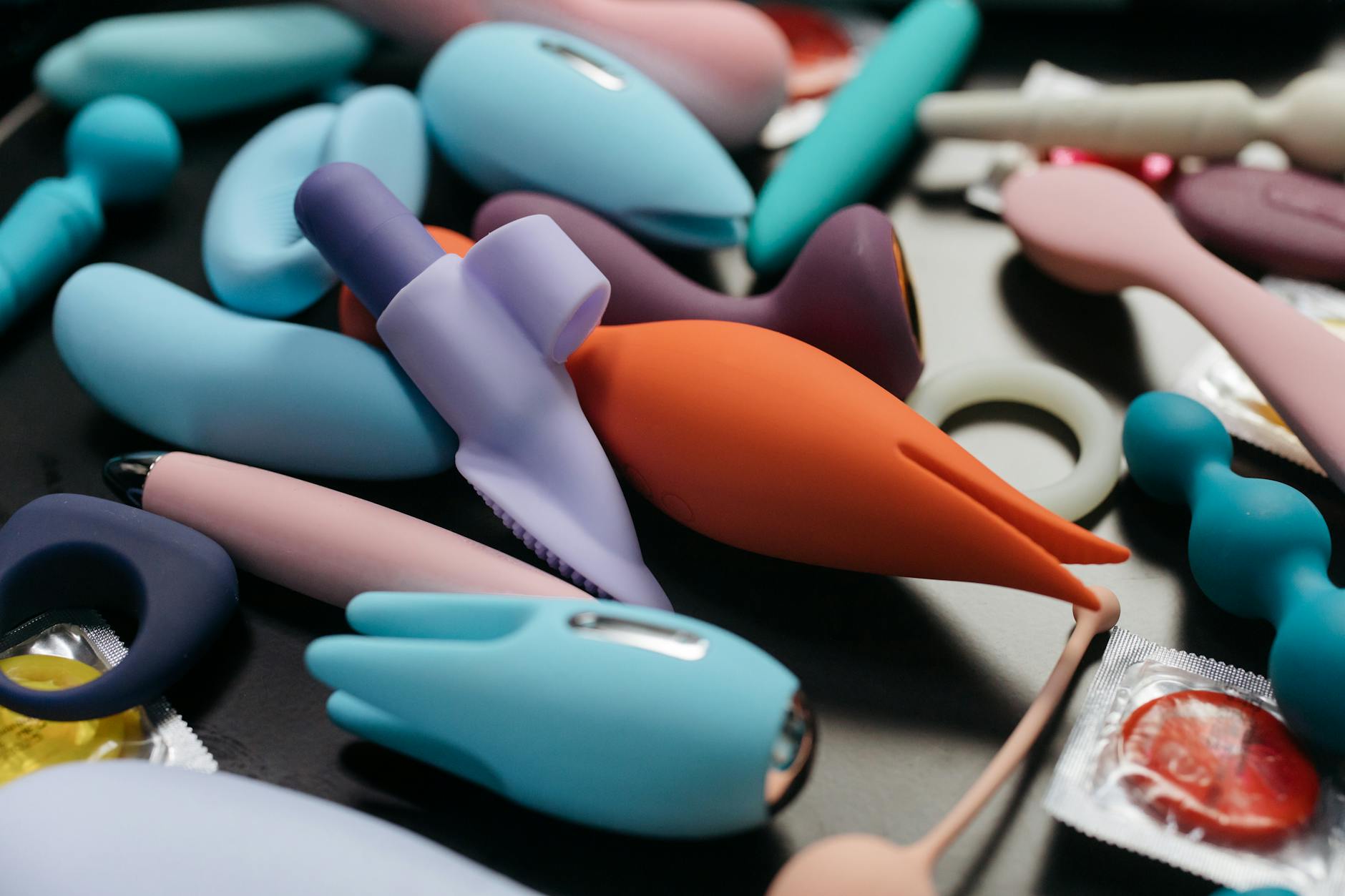
Let's be real about couples and sex
You've been together five years. Or fifteen. Or two, but it's been rocky. Somewhere along the way, sex stopped being something that happened and started being something you scheduled, negotiated, or quietly avoided. Now when it comes up, one partner feels rejected and the other feels pressured. Both of you have stopped enjoying it.
This is not a dead relationship. It's a stuck one. And the thing about stuck is that it's fixable.
Here's what I see in my practice: couples don't lose desire because they stop loving each other. They lose desire because sex has become a performance evaluation instead of a pleasure experience. Someone's checking the clock. Someone's worried they're taking too long. Someone's thinking about their body instead of the sensations. Someone's doing it to avoid a fight rather than because they want to.
Why lemon clitoral vibrators change the dynamic
Let me back up and explain what I mean by that. A lemon vibrator, or lem vibrator as the Lem Nancy's model is called, works through suction and gentle pulsing. It's completely different from traditional wand vibrators. It doesn't require intense friction or lengthy buildup. The sensation is faster, cleaner, and less dependent on what your body is "supposed" to do.
For couples specifically, this matters because it removes negotiation from the equation. Here's why.
When one partner is the giver and one is the receiver, there's an invisible power dynamic. "Am I doing this right? Is this taking too long? Should I switch to something else?" These internal monologues kill pleasure for both people. With a lemon sucker, the person receiving can control the intensity directly. The giver isn't performing. They're present.
The permission structure shifts
One of the biggest obstacles I work with is what I call "obligation sex." One partner initiates. The other agrees, not enthusiastically, but out of fear the relationship will suffer if they don't. Then both people are having sex while feeling resentful. Nobody wins.
Lemon clitoral vibrators break this pattern because they depersonalize pleasure. You're not saying "I want you to make me come." You're saying "I want to feel good, and I'm going to use this tool to do it." Your partner can be present, can touch you, can be part of the experience. But the success isn't on them.
This is genuinely freeing for both partners. The receiver doesn't feel they're "failing" at orgasm. The giver isn't carrying the responsibility of producing pleasure on demand. You're collaborating instead of performing.
How to introduce this to your partner
Okay, so the concept sounds good. But how do you actually bring a lemon vibrator into the conversation without making it weird.
Don't frame it as a problem solve. Don't say, "Your technique isn't working." Don't say, "I need this because you're not doing something right." That's the language of inadequacy, and it will land badly.
Instead, frame it as an upgrade. "I want to try something that feels really good. I want you to be part of it. It might actually feel different for both of us." That's invitation, not correction.
Then pick a moment that's low stakes. Not when you're both already frustrated. Not when one of you is tired. Pick a weekend morning or a time when you're both relaxed and there's no time pressure. Show your partner the toy. Explain how it works. Ask what they think. Give them permission to have feelings about it.
Maybe they're skeptical. Most people are at first. The Lem Nancy's lemon clitoral vibrator looks unusual. It's shaped like, well, a lemon. People have ideas about what sex toys "should" look like. Getting curious about the "why" of the design often helps. Suction stimulation is gentler on sensitive tissue and works faster than friction-based stimulation. It requires less performance anxiety from everyone involved.
What happens when you use it together
Let's say your partner is on board. You're both in bed. You're using the lemon vibrator together. What actually changes.
First, arousal often accelerates because there's less cognitive load. You're not thinking about whether this is working or whether your body is responding the "right" way. Your nervous system can relax into sensation.
Second, your partner gets to be a different kind of active. Instead of "performing" pleasure, they're supporting it. They might touch you somewhere else. They might watch. They might talk. They might simply be present. This often feels more intimate than traditional penetrative sex, because the focus is actually on sensation rather than performance metrics.
Third, and this matters, you might have an orgasm. If you've been having trouble with that, this alone can reset your nervous system's relationship to pleasure. Your brain stops catastrophizing. Your body remembers that good feelings are possible. And honestly, that changes everything.
When pleasure comes back, intimacy follows
I want to be really clear about something. Using a lemon clitoral vibrator is not a substitute for couples therapy or communication work. If your relationship has deeper problems, a toy won't fix that.
But here's what I've observed. When couples restart the pleasure part of sex, when they experience orgasm and sensation together without the weight of performance, other things shift. They touch more. They laugh more. They feel less defensive about each other. The nervous system literally rewires around the idea that sex is safe and fun again.
This is not magic. It's biology. When you have consistent positive experiences, your brain starts anticipating them. You stop avoiding. You start initiating. You feel more connected to your partner because you're not carrying resentment about your sex life.
The conversation doesn't end with the toy
Introducing a lemon sexual toy is not the end of the conversation. It's the beginning. Once you've done this together, you might talk about what felt good, what felt different, what you want to try next.
Some couples discover they like using lemon adult toys solo and then sharing that experience. Some find they want to explore other types of stimulation now that they've depressurized the situation. Some just use it regularly as part of their routine and find that consistency helps maintain connection.
The real shift is permission. You're both giving each other permission to prioritize pleasure. You're both agreeing that sex doesn't have to look a specific way. You're both saying, "Your body and your feelings matter. Let's figure this out together."
That permission is what actually rebuilds intimacy.

Photo by cottonbro studio on Pexels
FAQ: Couples and Lemon Vibrators
Can using a lemon vibrator together actually help a relationship?
Yes. Not as a replacement for communication or therapy if those are needed, but as a practical reset. When couples restart the pleasure part of sex without performance pressure, they often feel less resentful and more connected. The nervous system rewires around the idea that sex is safe and fun. That ripples into other parts of the relationship.
Will my partner feel like I'm rejecting them if I use a vibrator?
Not if you frame it correctly. Most partners feel relieved when the pressure comes off. You're not saying "You're not enough." You're saying "I want to feel good, and I'd like you here with me." Those are totally different messages. If your partner struggles with this, that might be worth exploring in conversation or with a couples therapist.
How do we use a lemon clitoral vibrator together without it feeling awkward?
Start by talking about it outside the bedroom. Normalize the tool before you're both in a vulnerable moment. Then when you're together, go slowly. There's no script. You might hold it together. They might use it on you while you kiss. You might use it yourself while they touch you elsewhere. The point is presence, not performance. Let it unfold naturally.
Is it normal for orgasms to feel different with a lemon sucker than with a partner's touch alone?
Completely. Suction stimulation is a different sensation. It's often faster and more concentrated. Some people say orgasms feel sharper. Some say they feel more whole body. That difference is not bad. It's just different. You might actually enjoy both sensations, depending on your mood and what you're looking for.
If we start using lemon vibrators together, does that mean we need to do it every time?
No. This is a tool, not a requirement. Some couples use them regularly. Some use them occasionally. Some use them for a while and then pivot to something else. The goal is pleasure and connection, not a specific routine. Let it be flexible.
What if only one of us wants to use a vibrator and the other isn't interested?
That's worth talking about. Understanding why your partner is hesitant is important. Is it insecurity? Is it a misunderstanding about what you're asking for? Is it simply not their preference? Different things require different conversations. But here's the bottom line: your pleasure matters. Your partner's comfort matters. Those two things can usually coexist if you're both willing to listen.
The real goal is sensation, not salvation
I've been doing relationship work for a long time. I've sat with couples who were nearly done and couples who were thriving. The ones who make it are the ones who keep saying yes to each other, even when things get hard.
Using a lemon vibrator together is one small way of saying yes. You're saying yes to pleasure. You're saying yes to trying something new. You're saying yes to your partner's body and your partner's desire. You're saying yes to the idea that sex can be fun again.
That yes matters way more than the toy itself.
If you want to talk through this with someone, or if you're navigating relationship transitions and want support, reach out. I'm here for that conversation.
References and Further Reading
- Gottman, J. M., & Silver, N. (2015). The Seven Principles for Making Marriage Work. Harmony Press.
- Perel, E. (2017). The State of Affairs: Rethinking Infidelity. Harper.
- van der Kolk, B. (2014). The Body Keeps the Score: Brain, Mind, and Body in the Healing of Trauma. Penguin.
- American College of Obstetricians and Gynecologists. (2018). Sexual Dysfunction. Committee Opinion No. 762.
- Masters, W. H., & Johnson, V. E. (1966). Human Sexual Response. Little, Brown and Company.